骨盆创伤:隐匿出血风险与团队资源Pelvic Trauma: Occult Bleeding Risk and Team Resources
这不是一张骨盆创伤处置清单,而是一门“先形成问题表征,再逐步获得信息”的临床思维课。学员需要说清已知、可疑、担心、xABCDE 优先级、资源瓶颈和下一次复评。This is not a pelvic-trauma treatment checklist. It is a progressive reasoning lesson: build a problem representation first, then receive new information. Learners state what is known, suspected, feared, prioritized within xABCDE, resource-limited, and due for reassessment.
Mechanismenergy + patternC/E concernvisible + hidden riskResourcesspace + team capacityReassesspatient + system
预计学习Estimated learning time · 45 分钟min
学完这门课,你能……After this course, you can…
把骨盆风险与其他可见/隐匿出血来源一起评估。Assess pelvic risk alongside other visible and occult bleeding sources.
说明骨盆带适用情境,并连接监督下技能训练。Explain binder context and connect it to supervised skills practice.
组织止血资源讨论并核对措施后反应。Organize hemorrhage-control resources and reassess response.
实习:识别与报告;规培:决策时机与监督下关键步骤;青年主治:团队指挥与资源调度。Intern: recognize/report; resident: decision timing and supervised key steps; early attending: team leadership and resources.
骨盆创伤:从识别隐匿出血到选择止血路径Pelvic trauma: from hidden bleeding to the right haemorrhage-control pathway
先学会认出危险、正确上骨盆带,再按 WSES 分级和国内共识选择止血路径;学完再进入下方互动病例。Recognise danger, apply the binder correctly, then choose a pathway by WSES grade and Chinese consensus; then try the interactive case.
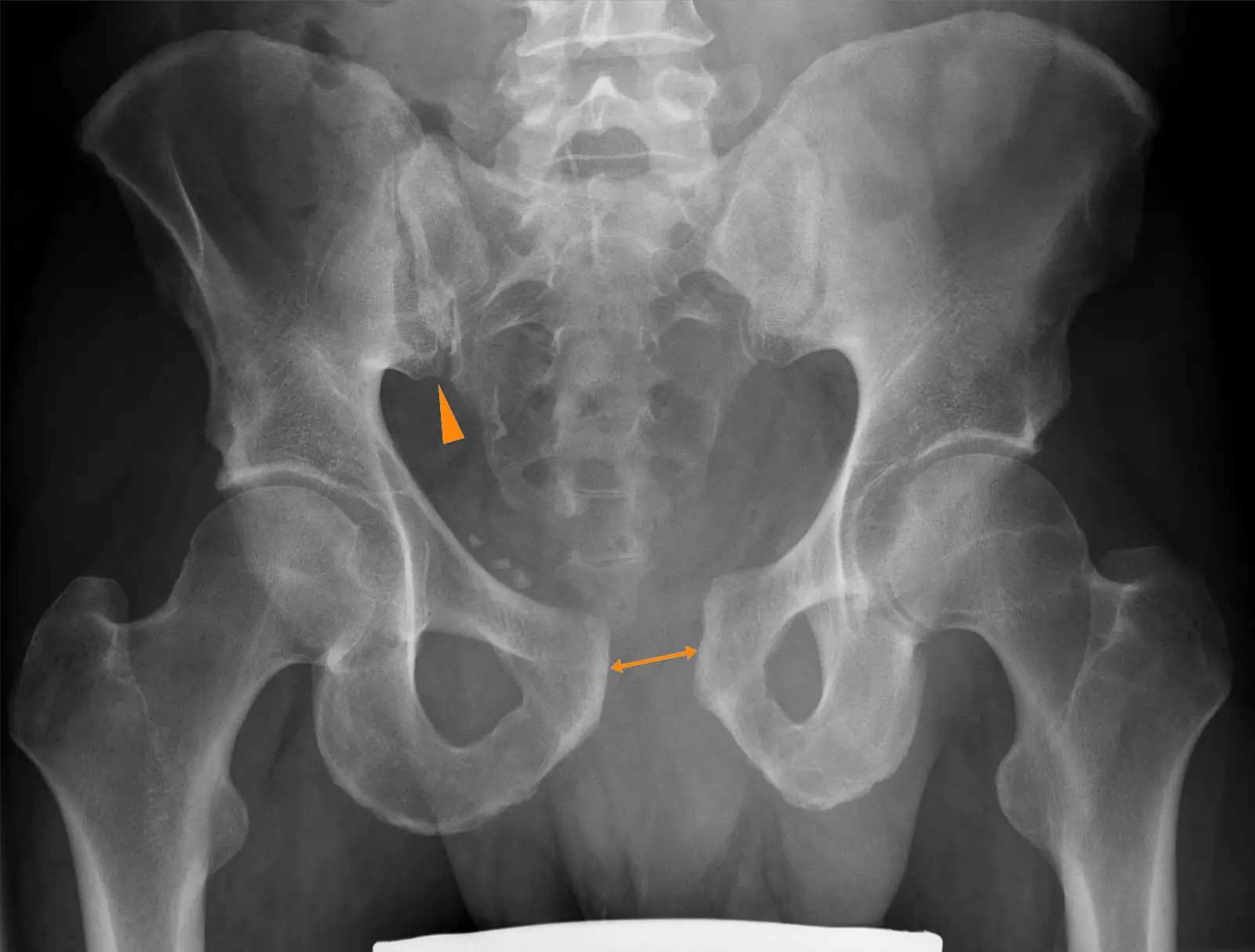
真实照片/影像Real image真实病例:跳水致“开书样”损伤。耻骨联合分离,右侧骶髂关节不对称(橙色标注),骨盆容积增大。Real case: open-book injury from diving. Symphysis disrupted, right SI joint incongruent (orange marks); pelvic volume increased.Hellerhoff · CC BY-SA 4.0 · Wikimedia Commons
01 · 为什么危险Why it is dangerous
骨盆像一个能装下大量血液的碗The pelvis is a bowl that can hold a lot of blood
高能量骨盆环损伤可在体表看不到血的情况下导致失血性休克。大部分出血来自骨折面和静脉丛,少部分来自动脉——所以“先关上碗”很重要。High-energy pelvic ring injuries can cause shock with no visible blood. Most bleeding comes from fracture surfaces and venous plexus, a minority from arteries — so close the bowl first.
出血来源Bleeding source
约 85% 来自骨、软组织或大静脉;动脉出血约占少数但常更凶险。About 85% from bone, soft tissue or large veins; arterial bleeding is a minority but often brisker.
合并伤Associated injuries
不稳定骨盆骨折患者中多达 90% 伴其他严重损伤:胸、腹、颅脑、长骨。Up to 90% of unstable pelvic fractures have other significant injuries.
死亡率Mortality
10–15% 到急诊时已休克,其中约三分之一死亡;近期报道死亡率约 32%。10–15% arrive in shock; about one third of them die (recent reports ~32%).
WSES:约 85% 的骨盆出血源自骨、软组织或主要静脉结构;死亡主要由不可控出血和生理衰竭造成。WSES: about 85% of pelvic bleeding originates from bone, soft tissue or major veins; deaths come mainly from uncontrolled bleeding and physiological exhaustion.
Coccolini F, et al. WSES classification and guidelines. World J Emerg Surg 2017;12:5
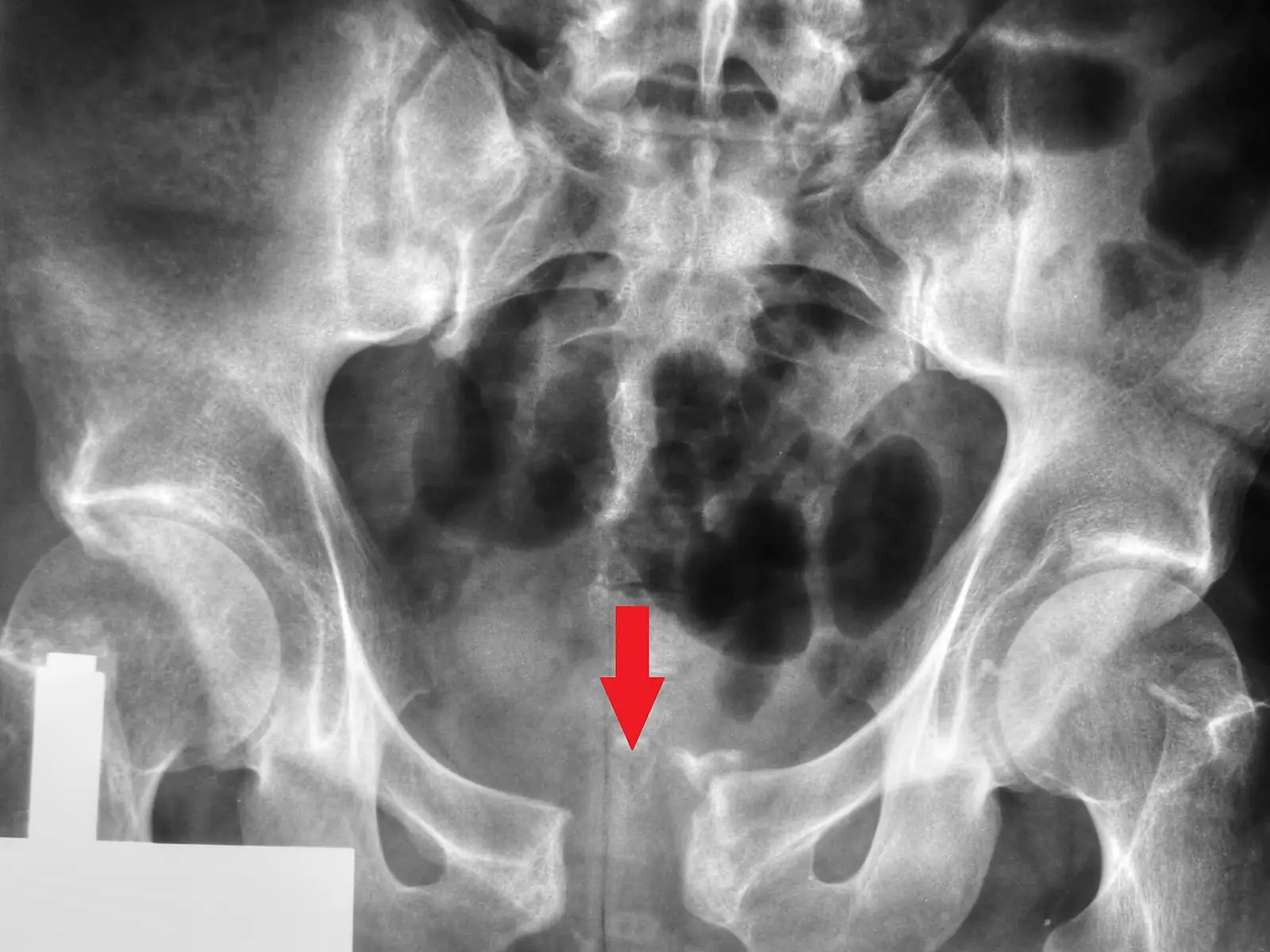
真实照片/影像Real image真实病例:外伤后开书样骨盆骨折,耻骨联合明显分离(红色箭头)。床旁骨盆正位片能迅速提示风险。Real case: post-traumatic open-book fracture with marked symphyseal diastasis (red arrow). A bedside AP pelvis flags the risk fast.Nevit Dilmen · CC BY-SA 3.0 · Wikimedia Commons
02 · 识别Recognise
认出“不稳定”:用数字而不是感觉Define “unstable” with numbers, not feelings
满足下列任一项,就按血流动力学不稳定处理,启动骨盆带、输血与止血资源。Any one of these means haemodynamically unstable: binder, blood and haemorrhage-control resources now.
查体Exam
看会阴/阴囊血肿、下肢短缩外旋、尿道口出血;骨盆挤压分离试验最多一次,怀疑时不做。Look for perineal/scrotal haematoma, shortened externally rotated leg, blood at meatus; spring the pelvis once at most, not at all if suspected.
影像Imaging
抢救室骨盆正位片 + eFAST;稳定者做多期增强 CT 看造影剂外溢。AP pelvis + eFAST in the bay; multiphase contrast CT if stable to look for blush.
别被骗Don’t be fooled
FAST 阴性不能排除腹膜后/骨盆出血。A negative FAST does not exclude retroperitoneal or pelvic bleeding.
中国专家共识(2015):怀疑骨盆骨折且血流动力学不稳定者不应过多搬动,禁忌行骨盆挤压-分离试验,尽早使用骨盆带。Chinese consensus (2015): in unstable patients with suspected pelvic fracture, minimise movement, avoid compression-distraction testing, apply a binder early.
展开:指南原文要点与教学提示Expand: guideline points and teaching notes
<90mmHg SBP
入院收缩压,或 >90 但需要液体/输血/血管活性药维持Admission SBP, or >90 needing boluses, transfusion or vasopressors
WSES 2017
BD >6mmol/L
入院碱缺失(BE < −6)Admission base deficit
WSES 2017
SI >1HR/SBP
休克指数 = 心率 ÷ 收缩压Shock index = HR ÷ SBP
WSES 2017
4–6 U红细胞RBC
24 小时内需要输注的浓缩红细胞Packed red cells needed within 24 h
WSES 2017
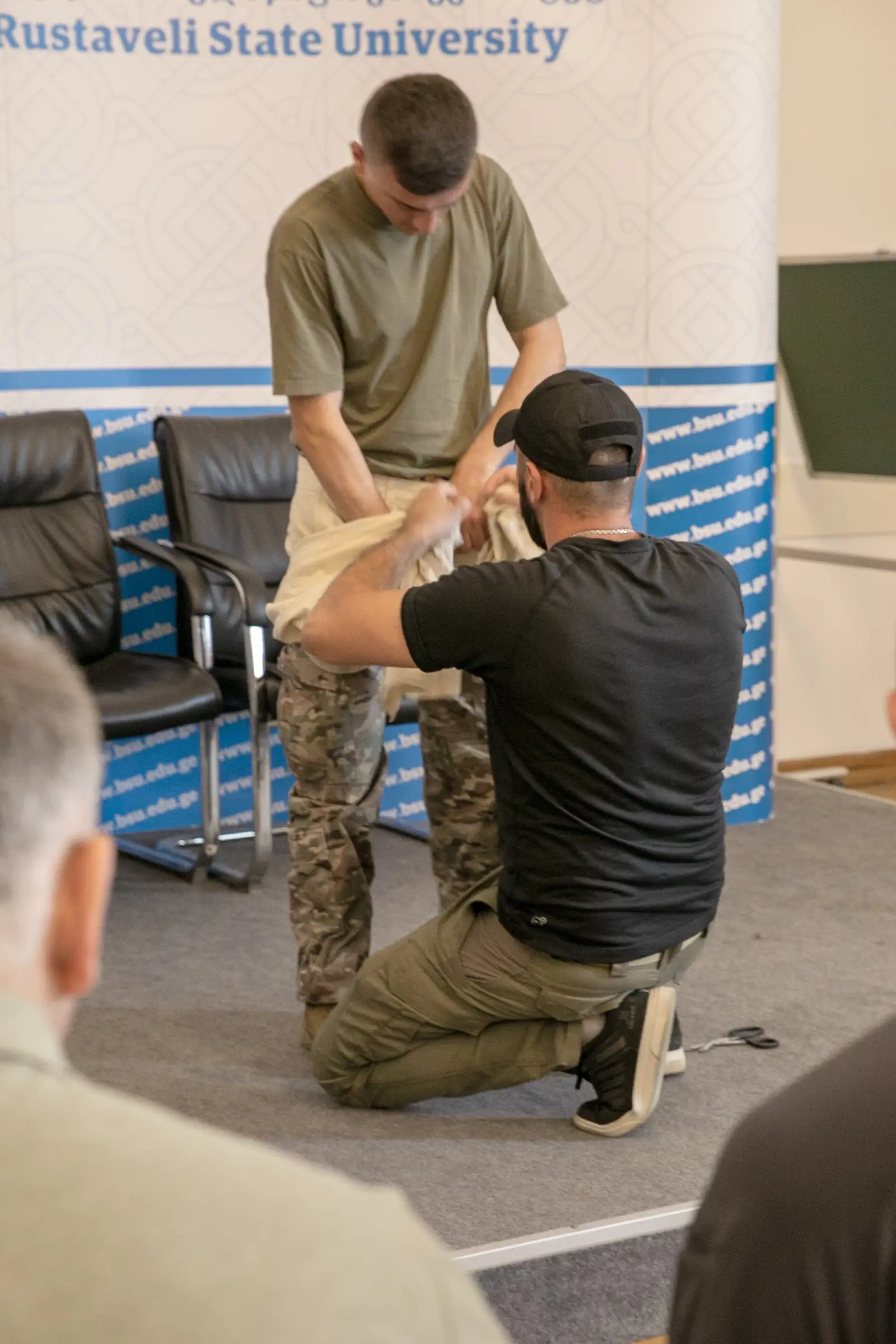
真实照片/影像Real image骨盆带培训:双手定位在大转子水平,再收紧(培训演示,非真实患者)。Binder training: hands locate the greater trochanters before tightening (demonstration, no patient).Sgt. Mykaela Martin · Public domain · Wikimedia Commons
03 · 骨盆带Binder
骨盆带:以股骨大转子为中心,不是髂嵴Pelvic binder: centre on the greater trochanters, not the iliac crests
骨盆带通过减少骨盆容积、稳定骨折端来减少出血。最常见的错误是绑得太高(在腰部/髂嵴),几乎没有作用。A binder reduces pelvic volume and stabilises fragments. The commonest error is placing it too high (waist/iliac crests), where it barely works.
位置Position
触摸双侧大转子,带子中线对准大转子;双膝内旋并拢、用绷带固定膝踝。Palpate both trochanters and centre the binder there; internally rotate and tie knees and ankles.
临时替代Improvised
没有专用骨盆带时,可用床单在同一水平环绕收紧并钳夹固定。Without a device, wrap a sheet at the same level and clamp it.
时间与皮肤Time & skin
尽早过渡到确定性固定;NICE 建议 24 小时内移除(WSES:不超过 24–48 小时),并先定好替代固定;定时查皮肤。Move to definitive fixation early; NICE removes binders within 24 h (WSES: ≤24–48 h) with a replacement plan; check skin.
欧洲指南 R20:怀疑骨盆骨折时院前即辅助使用骨盆带(1C);骨盆环破裂合并失血性休克者立即闭合并稳定骨盆环(1B)。European guideline R20: adjunct pre-hospital binder for suspected pelvic fracture (1C); immediate ring closure and stabilisation in haemorrhagic shock (1B).
展开:指南原文要点与教学提示Expand: guideline points and teaching notes
WSES 提醒:骨盆带过紧或长时间持续压力(>9.3 kPa 超过 2–3 小时)会增加皮肤坏死和压疮风险。WSES warns that over-tightening or continuous pressure (>9.3 kPa for >2–3 h) raises the risk of skin necrosis and pressure ulcers.
真实照片/影像Real image临时骨盆固定培训:用衣物/床单代替专用骨盆带。Improvised binding training with clothing or a sheet.Sgt. Mykaela Martin · Public domain · Wikimedia Commons
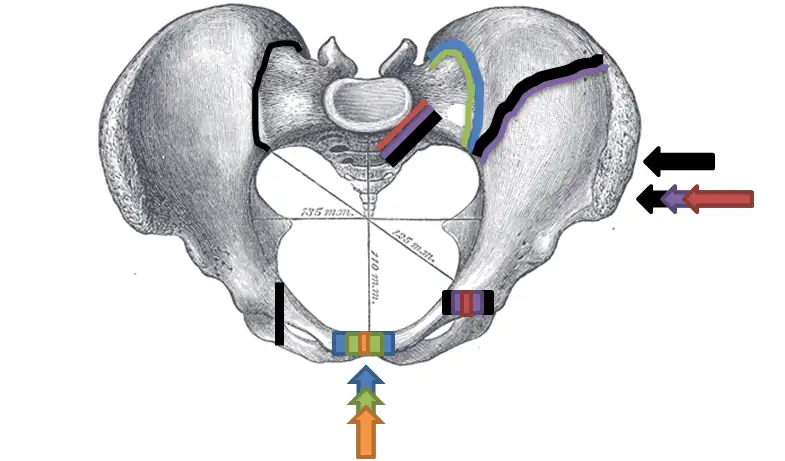
真实照片/影像Real imageYoung-Burgess 分型示意:APC(前后挤压)、LC(侧方挤压)、VS(垂直剪切),颜色与箭头对应受力与骨折线。Young-Burgess: APC, LC and VS; colours and arrows match force and fracture lines.Gray's Anatomy of the Human Body · Public domain · Wikimedia Commons
04 · 分型Classification
分型:Young-Burgess 看机制,WSES 看生理Classify: Young-Burgess for mechanism, WSES for physiology
Young-Burgess 告诉你力从哪里来、哪里会破;WSES 分级把骨折形态和血流动力学结合起来,直接对应处理路径。Young-Burgess tells you where the force came from and what breaks; WSES combines anatomy with haemodynamics and maps to a pathway.
APCAPC
前后挤压,“开书样”,骨盆容积增大,出血风险高(APC-II/III)。Anteroposterior compression, “open book”: volume increases, high bleeding risk (APC-II/III).
LCLC
侧方挤压,最常见;老年人低能量 LC 也可能大出血(尤其服抗凝药)。Lateral compression, commonest; even low-energy LC can bleed in older adults, especially on anticoagulants.
VS / CMVS / CM
垂直剪切多见于高处坠落,半骨盆上移;混合机制并存。Vertical shear from falls with hemipelvis displacement; combined mechanisms coexist.
WSES 分级中,只要血流动力学不稳定,无论骨折类型均为 IV 级(重度)。In WSES grading, any haemodynamically unstable patient is grade IV (severe), whatever the fracture pattern.
WSES 2017 · Young & Burgess classification
展开:指南原文要点与教学提示Expand: guideline points and teaching notes
WSES
严重度Severity
Young-Burgess
血流动力学Haemodynamics
首选路径First-line pathway
I
轻Minor
APC-I · LC-I
稳定Stable
增强 CT → 多为非手术治疗Contrast CT → usually non-operative
II
中Moderate
LC-II/III · APC-II/III
稳定Stable
增强 CT;有造影剂外溢考虑血管栓塞;择期固定Contrast CT; embolise if blush; elective fixation
AI 教学插图AI teaching illustration多学科团队:急诊、创伤外科、骨科、介入、麻醉同步决策。MDT: emergency, trauma surgery, orthopaedics, IR and anaesthesia decide together.
05 · 止血路径Haemorrhage control
按路径止血:填塞、栓塞、REBOA 各有位置Follow the pathway: packing, embolisation and REBOA each have a place
不稳定患者不去 CT,而是去能止血的地方。没有 24 小时介入能力的医院,腹膜外骨盆填塞联合外固定是重要选择。Unstable patients go to where bleeding stops, not to CT. Where 24-hour IR is unavailable, preperitoneal packing with external fixation is key.
腹膜外填塞Preperitoneal packing
骨盆出血致不稳定时均应考虑,尤其无介入条件的医院(WSES 1C);须与骨盆稳定联合。Consider in all pelvic-related instability, especially without IR (WSES 1C); combine with stabilisation.
血管栓塞Angioembolisation
CT 见动脉造影剂外溢,或填塞/固定后仍不稳定时考虑。For arterial blush on CT, or persistent instability after packing/fixation.
REBOAREBOA
只是“通往手术或栓塞的桥”,不是确定性止血;Zone III 用于骨盆出血。Only a bridge to surgery or embolisation, not definitive control; Zone III for pelvic bleeding.
WSES:REBOA 被定位为“通往手术的桥梁”;中国共识(2015)也建议极不稳定者在急诊室稳定骨盆、腹膜外填塞和/或主动脉球囊阻断后立即送导管室。WSES positions REBOA as a bridge to surgery; the 2015 Chinese consensus advises stabilisation, packing and/or balloon occlusion in the ED, then straight to angiography for extreme instability.
WSES 2017 · 中国共识 2015 · 骨盆骨折现代救治专家共识(2025)WSES 2017 · Chinese consensus 2015 · Chinese pelvic fracture consensus (2025)
展开:指南原文要点与教学提示Expand: guideline points and teaching notes
ICU 纠正生理,尽早移除骨盆带(NICE:24 h 内,先定替代固定),生理稳定后确定性内固定ICU correction, remove binder early (NICE: within 24 h, with a replacement plan), definitive fixation once physiology allows
真实照片/影像Real image国内急诊科。复杂骨盆创伤需要急诊、骨科、泌尿、普外、介入同步会诊。A Chinese emergency department: complex pelvic trauma needs simultaneous emergency, orthopaedic, urology, general surgery and IR input.李汉宗(Lhzss8) · CC BY-SA 4.0 · Wikimedia Commons
06 · 合并伤Associated injuries
别只看骨盆:尿道、直肠、阴道和开放伤口Look beyond the bone: urethra, rectum, vagina and open wounds
骨盆骨折常合并泌尿生殖和直肠损伤。开放性骨盆骨折死亡率更高,需要尽早识别和多学科处理。Pelvic fractures often involve genitourinary and rectal injury. Open pelvic fractures carry higher mortality and need early MDT care.
尿道Urethra
尿道口出血、会阴血肿、男性前列腺上移 → 先逆行尿道造影,不盲插导尿管;必要时耻骨上造瘘。Blood at meatus, perineal haematoma, high-riding prostate → retrograde urethrogram before catheter; suprapubic if needed.
直肠/阴道Rectum/vagina
检查有无出血或骨折刺破;开放伤需早期抗生素、清创,必要时粪便转流。Check for blood or penetrating fragments; open injuries need early antibiotics, debridement, possibly diversion.
老年人Older adults
低能量跌倒也可大出血;询问抗凝/抗血小板药并尽早逆转。Low-energy falls can bleed; ask about anticoagulants/antiplatelets and reverse early.
WSES:高等级损伤中胸腹合并伤可达 80%;膀胱、尿道(1.6–25%)、阴道、直肠等损伤在会阴血肿或广泛软组织破坏时应高度怀疑。WSES: thoraco-abdominal injuries in up to 80% of high-grade cases; suspect bladder, urethra (1.6–25%), vagina and rectum with perineal haematoma or major soft-tissue disruption.
WSES 2017 · ATLS 11 Musculoskeletal trauma
骨盆创伤最常见的 4 个错误Four common pelvic trauma mistakes
✕骨盆带绑在腰部髂嵴水平。Binder placed at the waist/iliac crests.
✓以股骨大转子为中心重新放置,并内旋并拢双下肢。Re-centre on the greater trochanters and internally rotate the legs.
EU 2023 R20 · WSES
✕反复挤压骨盆“确认”不稳定。Repeatedly springing the pelvis to “confirm” instability.
✓怀疑即不做挤压分离试验,靠骨盆正位片和 CT 诊断。If suspected, skip springing; diagnose with AP pelvis and CT.
中国共识 2015Chinese consensus 2015
✕FAST 阴性就停止找出血。Stopping the bleeding search after a negative FAST.
✓FAST 看不到腹膜后;持续不稳定按骨盆出血路径处理。FAST misses the retroperitoneum; treat persistent instability as pelvic bleeding.
WSES 2017
✕不稳定患者先送 CT。Sending an unstable patient to CT first.
✓去手术室/杂交手术室或导管室止血;稳定后再做 CT。Go to OR/hybrid OR or angiography; CT once stable.
教学用途。影像为公开授权的真实病例,已注明作者与许可;具体处置以最新指南、本院能力与多学科讨论为准。For teaching. Images are openly licensed real cases with attribution; management follows current guidelines, local capability and MDT decisions.
合成病例,无真实患者资料。答案默认隐藏,先提交判断。Synthetic case with no real patient data. Answers stay hidden until a judgment is submitted.
病例进度Case progress
已提交判断:0Judgments submitted: 0
信息释放Information release
已释放:0Released: 0
课程边界Boundary
observe · report · coordinate · reassess
Step 1 · Prehospital notification
只给你院前一句话:第一张团队白板写什么?With one prehospital sentence, what belongs on the first team board?
成年人,高能量道路交通碰撞,撞击模式可能涉及躯干和骨盆。现场信息有限,预计短时间内到院。An adult is involved in a high-energy road collision with possible torso and pelvic loading. Scene information is limited and arrival is expected soon.
参考思路Reasoning reference
较完整的白板会区分机制已知信息、生命威胁与保护状态的未知信息、对隐匿出血和合并伤的担心,以及负责接收交接、记录趋势和更新资源的人。A fuller board separates known mechanism, unknown threat and protection status, concern for hidden bleeding and associated injury, and who receives handover, records trends, and updates resources.
复评问题Reassessment question
到院后哪一条新信息最可能改变当前风险排序?Which new arrival finding could most change the current risk order?
Step 2 · Problem representation
把杂乱信息压缩成一句创伤问题表征Compress fragmented information into one trauma problem representation
参考思路Reasoning reference
问题表征应保留机制、信息不完整、隐匿风险、合并伤和趋势复评,避免把单一影像诊断当成完整的创伤问题。The representation should preserve mechanism, incomplete information, occult risk, associated injury, and trend reassessment rather than reducing trauma to one imaging diagnosis.
复评问题Reassessment question
哪项新发现会让 A、B、C、D 或 E 的排序改变?Which new finding could reorder A, B, C, D, or E?
Step 3 · xABCDE priority
选择需要持续盯住的轴,并说明相互影响Choose the axes requiring sustained attention and explain their interaction
参考思路Reasoning reference
本病例重点是 C/E,但不能把它们与 A/B/D 或系统容量割裂。任何新的呼吸、意识、体征或资源信息都可能改变排序。C/E is the teaching focus, but it cannot be separated from A/B/D or system capacity. New breathing, mental-status, examination, or resource information may change the order.
复评问题Reassessment question
谁负责说出“患者变化”和“系统变化”各是什么?Who states the patient change and the system change?
Step 4 · Team task map
优先级形成后,把下一步写成团队任务After prioritization, convert the next step into team tasks
本页给出指南来源的参考数字与关键步骤,按学员层级使用:实习识别与报告;规培在上级监督下执行;主治指挥与资源调度。所有剂量和阈值;以本院规范为准。Use source-qualified reference numbers and key steps by level: interns recognize/report, residents perform under senior supervision, attendings lead and coordinate resources. Follow institutional policy.
参考思路Reasoning reference
团队任务可包括持续记录趋势、结构化报告不确定信息、同步检查与下游资源状态、明确下一次复评时间点和责任人。具体临床行动由资深团队依据指南和本地流程决定。Team tasks may include trend recording, structured reporting of uncertainty, synchronizing investigation and downstream resource state, and naming the next reassessment point and owner. Qualified teams decide clinical actions under guidelines and local policy.
复评问题Reassessment question
资源没有到位时,哪些未知信息必须继续保留在共享白板?While resources remain pending, which unknowns stay on the shared board?
到院信息逐步释放Progressive Arrival Information
每释放一张卡,学员都要重新说一次优先级和下一次复评。After each card, learners restate priorities and the next reassessment.
1 · 总貌与交接1 · Overall view and handover
患者能够交流,但疼痛明显。院前记录提供了机制信息,骨盆风险、搬动过程和趋势记录仍不完整。The patient can communicate but has marked pain. Prehospital notes provide mechanism, while pelvic risk, movement history, and trend documentation remain incomplete.
instructor_authored2 · 循环趋势2 · Circulation trend
连续观察中,皮肤灌注表现和整体状态出现令人担心的趋势;没有单一数值可以替代团队综合判断。Repeated observation shows a concerning trend in skin perfusion and overall state; no single value replaces team synthesis.
3 · 暴露与骨盆区域3 · Exposure and pelvic region
下躯干疼痛和活动受限更加明确,体表没有足以解释全部循环担心的明显外出血。Lower-trunk pain and movement limitation become clearer, while visible external bleeding does not explain the full circulatory concern.
胸部、腹部、脊柱、四肢和神经系统仍有未完成的信息。骨盆风险不能让团队停止寻找其他出血或损伤来源。Chest, abdomen, spine, limbs, and neurologic information remain incomplete. Pelvic concern must not stop the search for other injury or bleeding sources.
source_index_pending_review5 · 检查结果的边界5 · Limits of test results
床旁信息没有显示某些腔隙的明确异常,但这不能自动排除腹膜后或骨盆相关出血担心。Bedside information does not show a clear abnormality in some spaces, but this does not automatically exclude retroperitoneal or pelvic bleeding concern.
影像、血库、手术/介入和转运资源的可用性不同步。团队需要同时更新患者优先级与系统瓶颈。Imaging, blood bank, surgical/procedural, and transfer availability are not synchronized. The team must update both patient priority and system bottlenecks.
辅助检查:它回答了什么,还没回答什么Investigations: What They Answer and What Remains Unknown
EFAST / FAST
课堂关注结果如何进入团队语言,以及阴性信息为什么不能被扩大解释为“没有腹膜后或骨盆相关风险”。不教授扫查步骤。The lesson focuses on how findings enter team language and why negative information should not be overextended to mean no retroperitoneal or pelvic concern. Scanning steps are not taught.
source_index_pending_review床旁影像 / CT 信息Bedside imaging / CT information
影像节点用于讨论解剖损伤、活动性出血担心、合并伤和下一步资源;具体时机和路径需由本院确认。Imaging is a discussion node for anatomy, bleeding concern, associated injury, and downstream resources. Timing and pathways require local confirmation.
实验室趋势Laboratory trends
实验室信息作为趋势与凝血/输血资源讨论节点。本页提供有来源的参考数字与关键步骤:实习识别与报告;规培在上级监督下执行;主治指挥与资源调度。剂量与阈值;以本院规范为准。、比例或治疗处方。Laboratory information is a trend and coagulation/blood-resource discussion node. The learner page shows no triggers, ratios, or prescriptions.
新检查不能替代再次观察意识、灌注表现、呼吸、疼痛、体表线索和整体趋势。New tests do not replace another look at mental status, perfusion appearance, breathing, pain, visible cues, and overall trend.
REAL SOURCES · READ → REASON → REASSESS
束带在位时的影像边界Imaging limitations with a binder in place
同一发表病例的两张图:先 CT,后束带移除后的平片。与课程合成病例严格分开。Two images from one published case: CT first, then radiography after binder removal. Keep them separate from the lesson’s synthetic patient.
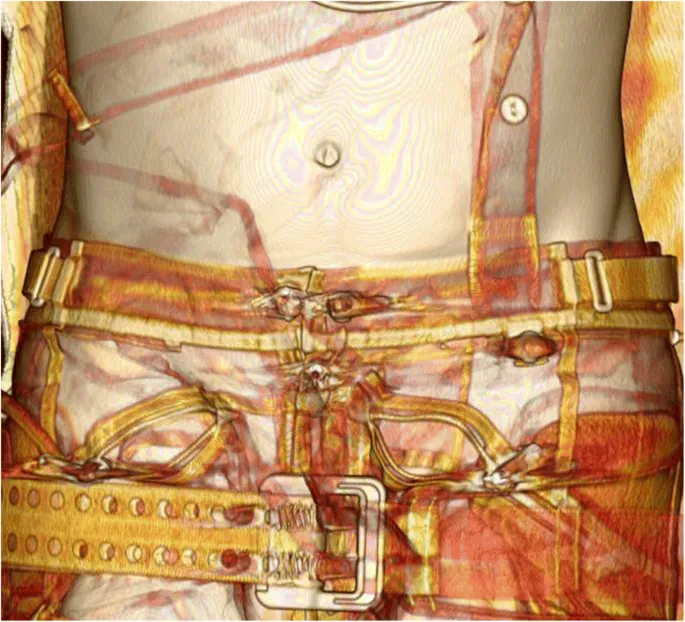
同一发表病例,Fig.1:束带在位 CT 重建Same published case, Fig.1: CT reconstruction with binder in place
先看哪里Where to look
识别环绕骨盆的束带;该病例先有束带在位 CT,之后才拍摄上面的平片。Identify the circumferential binder. In this published case CT with the binder preceded the radiograph above.
这张图不能回答What this image cannot answer
3D 图不能替代完整 CT、床旁稳定性和灌注判断;影像表面复位不等于出血已控制。The 3D view cannot replace the full CT, bedside stability or perfusion assessment. Apparent reduction does not mean bleeding is controlled.
原始图注与许可Original caption and licence
Jamme S, Poletti A, Gamulin A, Rutschmann O, Andereggen E, Grosgurin O, Marti C · CC BY 4.0 · Original source / 原图出处
Computed tomography showing the pelvic binder (SAM® Pelvic Sling™ II) in situ
Figure 1 — 同上(Jamme S et al. J Med Case Rep. 2018;12:271) · Figure 1 — 同上(Jamme S et al. J Med Case Rep. 2018;12:271)
保留原图;网页仅按比例显示。读图释义由课程另写,不是原作者诊疗结论。Original image retained and displayed proportionally. Teaching interpretation is separate from the original clinical conclusions.
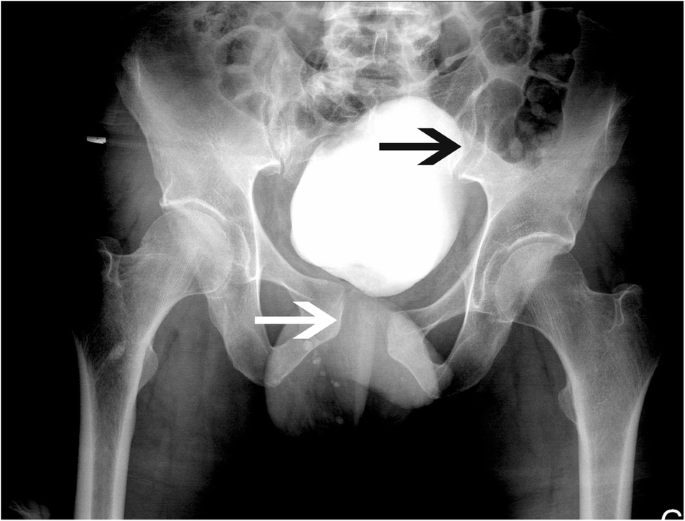
Jamme 等 2018,Fig.5:束带移除后骨盆片Jamme et al. 2018, Fig.5: pelvis after binder removal
先看哪里Where to look
白箭标示耻骨联合分离,黑箭标示左骶髂关节异常。作者病例提示束带可能掩盖损伤。The white arrow marks symphyseal separation; the black arrow marks left SI disruption. The published case illustrates masking by a binder.
这张图不能回答What this image cannot answer
不是本课合成病例;不能证明活动性出血。不能据此制定所有患者的束带移除流程。Not the lesson’s synthetic case; it does not establish active bleeding or a universal binder-removal protocol.
原始图注与许可Original caption and licence
Jamme S, Poletti A, Gamulin A, Rutschmann O, Andereggen E, Grosgurin O, Marti C · CC BY 4.0 · Original source / 原图出处
Pelvic anteroposterior plain film after binder removal showing pubic symphysis diastasis (white arrow) and left sacroiliac disruption (black arrow)
Figure 5 — Jamme S et al. False negative computed tomography scan due to pelvic binder in a patient with pelvic disruption: a case report and review of the literature. J Med Case Rep. 2018;12:271. DOI: 10.1186/s13256-018-1808-7 · Figure 5 — Jamme S et al. False negative computed tomography scan due to pelvic binder in a patient with pelvic disruption: a case report and review of the literature. J Med Case Rep. 2018;12:271. DOI: 10.1186/s13256-018-1808-7
保留原图;网页仅按比例显示。读图释义由课程另写,不是原作者诊疗结论。Original image retained and displayed proportionally. Teaching interpretation is separate from the original clinical conclusions.
01
风险从机制与生理开始Start with mechanism and physiology
高能量机制和持续灌注异常需要考虑骨盆及其他隐匿出血来源;避免反复诱发骨盆不稳的检查。High-energy mechanism and persistent perfusion abnormalities warrant assessment of pelvic and other occult bleeding sources; avoid repeated provocative pelvic testing.
02
影像记录检查条件Record imaging conditions
报告束带是否在位、检查时的生理和未回答的问题。表面复位不能独立排除骨盆环损伤。Report binder status, physiology at imaging and unresolved questions. Apparent reduction cannot independently exclude pelvic ring injury.
03
资源与复评同步Coordinate resources and reassessment
骨科、止血、复苏及进一步影像路径按生理与本地资源协同制定,束带移除需团队计划。Coordinate orthopaedic, haemorrhage-control, resuscitation and imaging pathways by physiology and local resources; binder removal requires a team plan.
暂停判断:束带在位 CT 未见异常,但疼痛持续,能结束评估吗?Pause and decide: CT with a binder is unremarkable but pain persists. Can assessment end?
不能。把检查条件、机制和症状一起报告,由团队安排安全的进一步评估;不要自行移除束带来测试。No. Report imaging conditions, mechanism and symptoms together and plan safe further assessment with the team; do not independently remove the binder to test stability.
真实公开图用于观察训练;病例与指南各自标明来源,病例报告不能单独建立普遍治疗规则。Public images support observation training. Case reports and guidelines are distinguished; a case report alone cannot establish a general treatment rule. Clinical applicability remains pending teacher review.
形成团队简报,并做双层复评Build a Team Brief and Perform Dual Reassessment
S · Situation
高能量钝性伤,存在骨盆与隐匿出血风险,当前信息仍不完整。High-energy blunt trauma with pelvic and occult-bleeding concern; information remains incomplete.
区分已知、可疑和担心;说明 C/E 重点及 A/B/D 和合并伤是否改变排序。Separate known, suspected, and feared; state the C/E focus and whether A/B/D or associated injury changes priority.
R · Resources / Reassessment
说清需要同步的资源、当前瓶颈、下一次患者复评和系统复评责任人。State resources to synchronize, current bottlenecks, and owners of the next patient and system reassessment.
最后练习:用 60 秒完成交接Final practice: deliver a 60-second handover
参考结构Reference structure
先说问题表征,再说趋势和未知;随后说明 xABCDE 重点、已完成的信息节点、资源瓶颈,以及下一次患者/系统复评由谁完成。Lead with the problem representation, then trend and unknowns. State xABCDE focus, completed information nodes, resource bottlenecks, and ownership of the next patient/system reassessment.
复评问题Reassessment question
简报结束后,接收者能否复述当前最担心的问题和下一次更新点?Can the receiver restate the leading concern and the next update point?
患者复评Patient reassessment
意识与整体表现Mental status and overall appearance
呼吸与灌注趋势Breathing and perfusion trend
新体征与新症状New findings and symptoms
团队行动后的变化Change after team action
系统复评System reassessment
人员、空间和设备Staff, space, and equipment
影像与下游能力Imaging and downstream capacity
血液与手术/介入资源Blood and surgical/procedural resources
转运与交接瓶颈Transfer and handover bottlenecks
教师提示Instructor Notes
建议节奏Suggested timing
院前信息 6 分钟,问题表征与优先级 10 分钟,信息释放 12 分钟,检查与资源 8 分钟,交接复盘 9 分钟。Prehospital information 6 minutes, representation and priority 10, information release 12, investigations and resources 8, handover debrief 9.
instructor_authored常见误区Common misconception
把没有明显外出血、某项床旁检查未见异常或一个时间点相对稳定,误认为隐匿风险已经被排除。Treating absent obvious external bleeding, a non-revealing bedside test, or one relatively stable moment as exclusion of occult risk.
揭示点Reveal point
每轮先让学员写出“新信息改变了什么”,再显示参考思路;教师不追求唯一答案,而追问理由和复评计划。Before revealing the reference, learners state what changed. The instructor asks for rationale and reassessment rather than one unique answer.
instructor_authored
来源与审核状态Sources and Review Status
来源最近核对日期:2026-07-16。索引可查不等于临床内容已经批准。Sources last checked: 2026-07-16. An indexed source does not mean the clinical content is approved.
病例为教师编写的合成病例,不含真实患者资料。The case is instructor-authored and synthetic, with no real patient data.
机制、生理趋势、骨盆解剖损伤和合并伤需一起解释风险;参考 WSES 骨盆创伤指南,仍需逐条临床审核。Mechanism, physiologic trend, pelvic anatomy, and associated injury are considered together; indexed to the WSES pelvic-trauma guideline and still requiring claim review.
evidence_review_required
床旁超声信息不能单独排除腹膜后或骨盆相关出血担心;参考 NICE NG39,需教师按具体课堂语句审核。Bedside ultrasound information alone does not exclude retroperitoneal or pelvic bleeding concern; indexed to NICE NG39 and requiring phrase-level faculty review.
source_index_pending_review
骨盆保护、影像、血液、手术、介入和转运路径只作为资源地图;本院启动标准和岗位分工尚未确认。Pelvic protection, imaging, blood, surgery, intervention, and transfer remain resource-map concepts; local activation and role allocation are unconfirmed.
本课按层级学习骨盆风险、决策与协作;规培关键步骤连接骨盆束带技能课,主治负责MDT与止血资源。Study pelvic risks, decisions and coordination by level; residents connect to the binder skill lesson and attendings coordinate MDT and hemorrhage resources.
具体方案;以本院为准;每项数字同时核对人群、阶段和来源。Follow institutional protocols; check population, stage and source with every number.
不稳定骨盆:固定与确定性止血Unstable pelvis: stabilization and definitive control
不稳定定义Instability definition
WSES:SBP<90,或需持续补液/输血/升压药维持;BD>6 mmol/L、SI>1或24 h需4–6 U RBC也是风险依据,单位不可跨国直接折算。以本院规范为准。WSES: SBP below 90 or maintained by ongoing fluids/blood/vasopressors; BD over 6, SI over 1 or4–6 RBC units in24 hours also indicate risk. Do not directly convert national component units. Follow institutional policy.
大转子→分流止血Greater trochanters→control pathway
骨盆带中心位于大转子/耻骨联合水平;无相关肢体禁忌时双膝并拢、踝内旋,避免反复挤压分离试验。同步血液、保温、TXA及其他出血源检查。以本院规范为准。Center the binder at greater trochanters/symphysis level; knees together and internal leg rotation when associated injuries allow. Avoid repeated springing. Coordinate blood, warming, TXA and other-source checks. Follow institutional policy.
骨盆带→动脉出血且不需开腹:血管造影栓塞;需开腹/快速控制:腹膜外填塞+外固定。REBOA Zone III仅受训团队为疑盆腔来源、极不稳定者的过渡,不是所有路径的必经最后一步。以本院规范为准。Binder→arterial bleeding without laparotomy need: AE; laparotomy/rapid control need: preperitoneal packing plus external fixation. ZoneIII REBOA is a skilled-team bridge in extreme instability with suspected pelvic source, not a mandatory final step. Follow institutional policy.
去除也有计划Removal needs a plan
NICE1.2.17:全部骨盆带24 h内去除;不稳定骨折先与骨盆外科确定替代固定。国内旧共识≤36 h条目需作者核对原文,不用较长上限替代现有移除计划。以本院规范为准。NICE 1.2.17 removes all binders within 24 hours, with an alternative stabilization plan for unstable fractures. The older Chinese at-most36-hour clause awaits author original-text verification; do not use it to extend current removal plans. Follow institutional policy.
本地队列:让作者数据与病例各自清楚Local cohort: distinguish author data and case evidence
IJEM2025作者补充框IJEM2025 author evidence slot
论文DOI10.1186/s12245-025-00990-5。作者请填:研究期间、样本数、纳排标准、主要结局及调整结果;本例是否入组未确认,不作推断。以本院规范为准。Paper DOI10.1186/s12245-025-00990-5. Author fields: study period, sample size, eligibility, outcomes and adjusted results. Whether this case entered the cohort is unconfirmed. Follow institutional policy.
本土证据:从队列回到 MDT 问题Local evidence: from cohort to MDT questions
Ding 等,IJEM 2025:32 例多发伤合并骨盆骨折的单中心回顾性研究;报告死亡 3/32(9.4%),胸部合并伤 28/32(87.5%)。Ding et al., IJEM 2025: a single-center retrospective cohort of 32 polytrauma patients with pelvic fractures, reporting 3/32 deaths (9.4%) and 28/32 associated thoracic injuries (87.5%).
教学启示:同时看全身损伤、生理趋势和跨专科接续。方法报告单因素及相关性分析;不能据此证明 MDT 降低死亡,或把 GCS/ISS 解释为已验证的独立因果因素。Teaching implication: integrate whole-body injury, physiological trends and specialty transitions. Reported methods use univariate/correlation analysis; this does not prove that MDT reduces mortality or establish GCS/ISS as independent causal factors.